



MODULE 2560 - ANALOG / SEQUENTIAL SWITCH
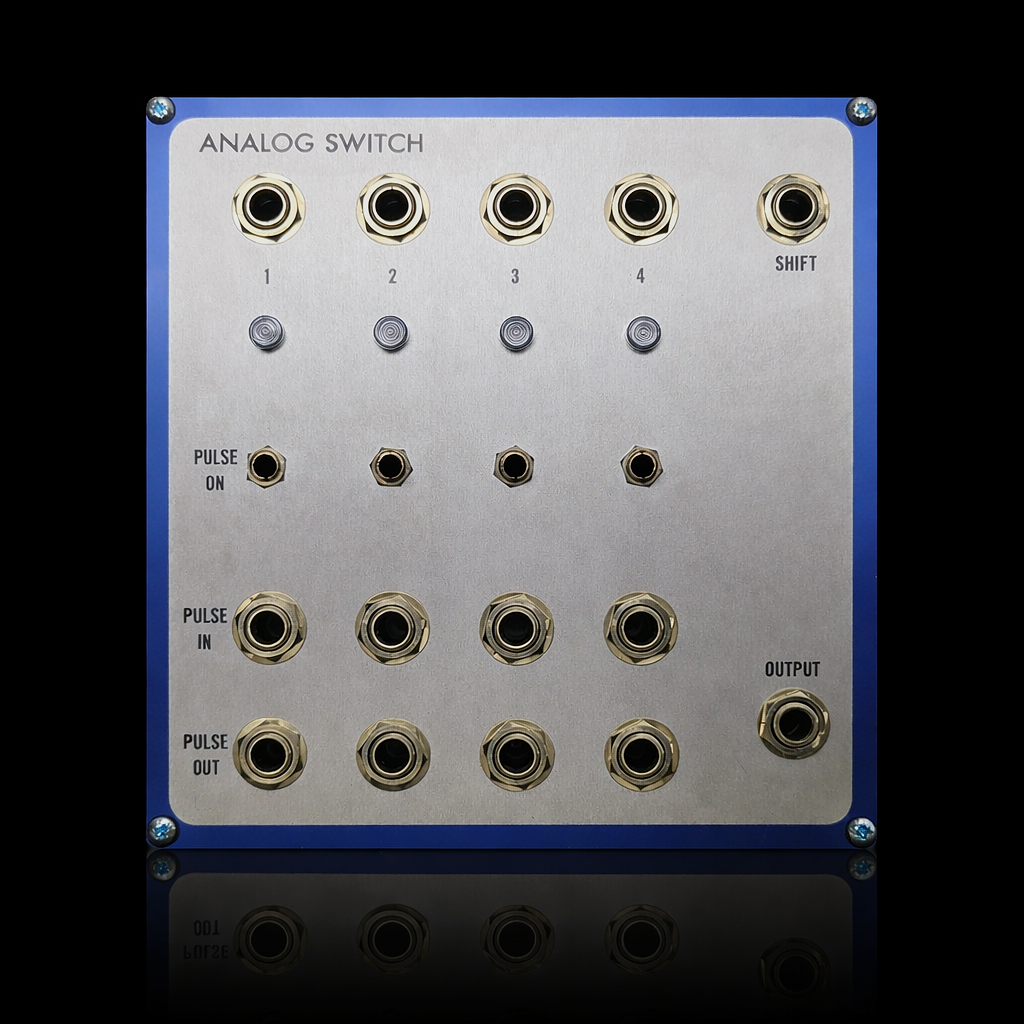
The 2500, 2510, 2520 and 2560 modules perform the basic potentiometer matrix functions of early sequencers. The 2510 is an eight position (3 bit) up/down presetable, cascadable counter; the 2520 is a 4 by 8 potentiometer matrix, and the 2560 is a sequential switch.
The 2560 Sequential Switch allows selection between two, three, or four signal inputs, connecting only one signal at a time to the output. A pulse applied to the Shift input advances the sequence. By default, the sequential switch alternates between stages one and two, ignoring stages three and four until a standard phone plug is connected to Signal Input 3 or 4. When a signal is patched into Input 3, the Sequential Switch alternates between three stages in order at each trigger, and likewise when a signal is connected to Input 4. Separate Trig input and output jacks are provided for each of the four stages, along with buttons for manual switching.
Panel size : 2 Width Unit
Power Requirements : ±15 V @ 10 mA typical
Price : 290€
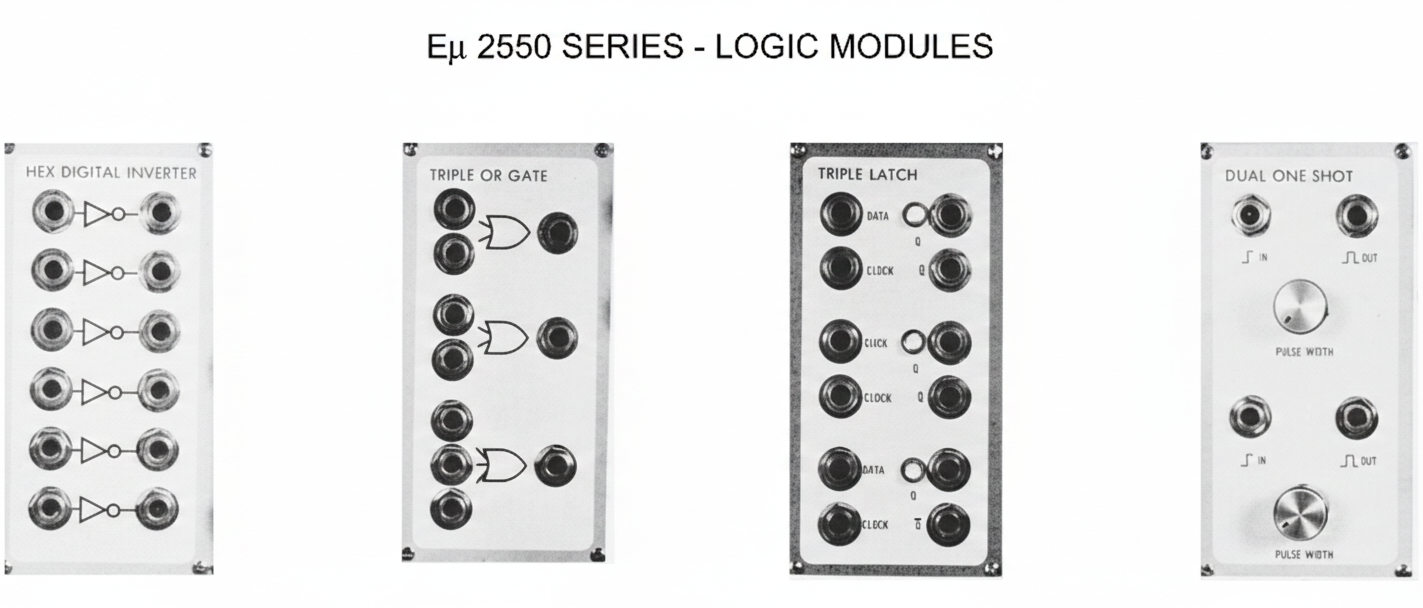
To chain the four rows of the 2520, it was originally necessary to use the 2530 Analog Switch. However, since this module is not a true sequential switch (it has no shift input), it was not possible to step from one row to the next using a clock signal without relying on additional modules such as the 2550 series logic modules. This significantly complicated the musical sequencing workflow.
Mos-Lab therefore decided to replace the 2530 Analog Switch and the 2550 modules with an entirely new module developed specifically for this purpose: the 2560 Sequential Switch. Built entirely with CMOS logic, it eliminates the need for these complex auxiliary modules.
Copyright © 2026, MOS-LAB . All Rights Reserved.